
Block Blast! review
 Analysis by GetAllApps
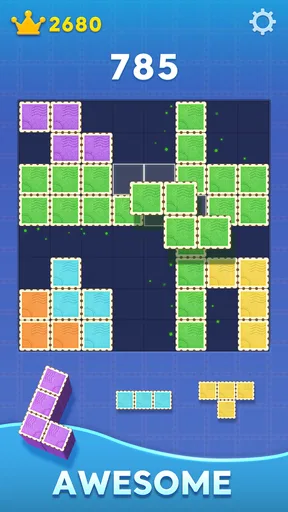
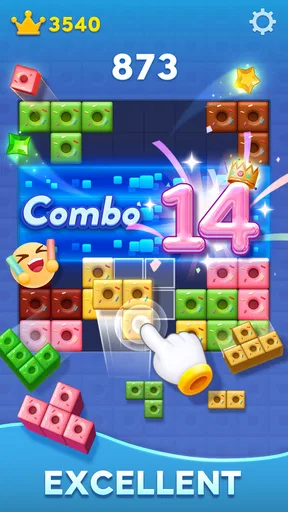
I find Block Blast! easiest to understand when I think of it as a small, self-contained puzzle break rather than a game that demands a long session. You place blocks on a grid, look for ways to clear space, and try to keep the board usable as new shapes arrive. That simple loop is the appeal: I can start without learning a story, managing a team, or remembering a complicated set of rules.
It is a puzzle game from HungryStudio, and its reputation is substantial: it has an average rating of 4.8 from around 5.8 million ratings, with more than a billion installs. Those figures suggest broad appeal, but they do not tell me whether the game will suit someone’s hands, eyes, attention, or patience. For that, the practical details matter more than popularity.
Reading the board and finding your way
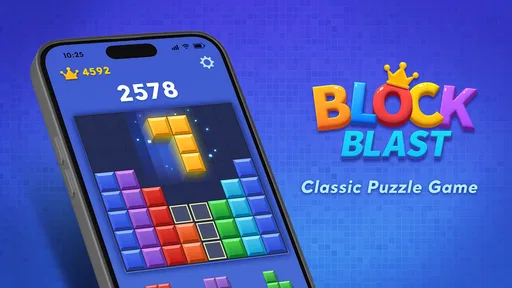
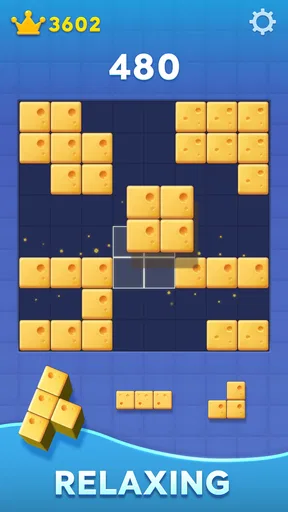
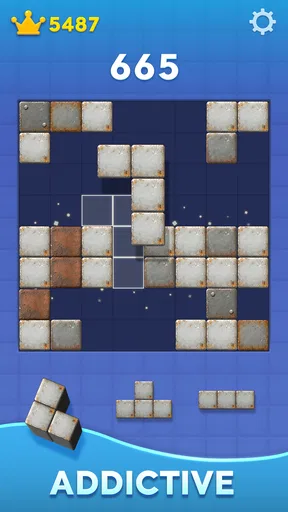
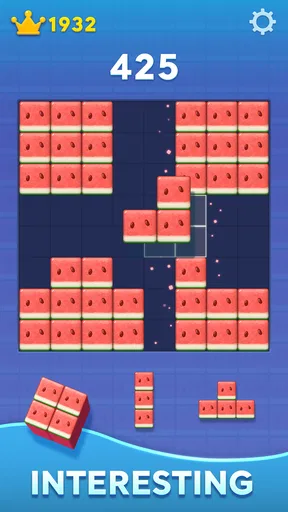
The board is the main interface, so the central task is visual: inspect the available shapes, compare them with the open spaces, and decide where each one can go. I appreciate that there is little introductory friction. A new player can understand the basic placement idea quickly, then learn through play how easily a careless move can make the remaining space awkward.
That clarity is useful for people who prefer direct, uncluttered rules. There is no need to follow a dialogue-heavy tutorial or keep track of a long sequence of objectives just to make a move. At the same time, a clean puzzle is not automatically an accessible one. The experience still depends on noticing the shapes and judging their fit against the grid, and visual comfort will vary from person to person.
My most useful habit is to scan the whole board before placing anything, rather than immediately choosing the piece that seems easiest to fit. I look first for narrow gaps and corners that could become unusable, then consider which shape might preserve more options. This is a small change in routine, but it makes the puzzle feel less like trial and error and more like deliberate planning.
For players who find a crowded screen difficult to interpret, it is worth trying a short session and checking whether the blocks remain easy to distinguish at the size they appear on their device. I would not assume that every person with low vision will find the board comfortable. The game’s basic premise is visually legible in concept, but the practical experience depends on contrast, screen size, eyesight, and how easily someone can track changing open spaces.
Comfort, precision, and sensory load
Moving a piece requires a deliberate touch or drag, so the game is not a purely hands-free puzzle. In my experience, the interaction is straightforward when I can tap accurately and keep my finger from obscuring too much of the board. Someone with tremor, limited dexterity, fatigue, or difficulty making precise gestures may find placements more demanding than the rules themselves suggest.
A helpful approach is to play with the device resting securely on a table or in a stable stand, rather than holding it in one hand while trying to make careful moves with the other. That can reduce wobble and make it easier to compare the available pieces with the board. I also recommend pausing between placements instead of rushing; this gives the player time to plan and can make a session less tiring.
The game’s quiet, repetitive puzzle rhythm can suit someone looking for a low-pressure activity, but it is not the same as a sensory-neutral experience. Screen movement, changing block arrangements, or any accompanying sound may be comfortable for one person and distracting for another. If those elements affect you, test the game briefly in a calm setting and use the device’s own sound and display controls as needed. I would not promise that the game itself offers a particular accessibility setting without checking it on the device in use.
There is also a meaningful difference between a relaxing pace and a puzzle that never creates pressure. Even without a rival demanding an immediate response, the board can become harder to manage as usable space shrinks. Players who want a completely predictable activity may prefer a static paper puzzle or a game with a fixed, easy-to-repeat layout. Here, the challenge comes from responding to the board as it develops.
Where it fits into an ordinary day
I can see this working well during a quiet wait: on a train, in a waiting room, or between errands when I have a few minutes but do not want to begin a story-driven game. Its puzzle format is easy to return to after a pause because the important information is right there on the board. The store summary also describes play without Wi-Fi, which makes it a plausible option when a connection is unavailable, though I would still avoid assuming every feature or purchase flow works offline.
For a shared household, it can be an easy game to pass around to someone who enjoys spatial puzzles but does not want a complicated setup. The trade-off is that the appeal is mostly in making one’s own placements. If you want lively conversation, cooperative play, or a social competition to structure the session, a multiplayer puzzle may be a better match. This is more naturally suited to brief individual focus.
It can also fit a short break at home, but I would set a stopping point before opening it if I only have a little time. A puzzle that looks like a quick diversion can invite another attempt once I start thinking about a better placement. That is not a special feature or a flaw unique to this title; it is a practical consequence of a simple loop that is easy to resume. People who need firm boundaries around screen time may want to use their device’s usual reminders.
Because the game is listed as free, the initial barrier to trying it is low. It also includes in-app purchases, with listed items ranging from about five to fifty dollars. I would treat those as optional spending rather than part of the basic decision to try the puzzle, and I would check purchase controls if a child uses the device. The content rating is Everyone, but that age label does not replace a parent’s judgment about screen habits or spending.
What it does differently from other puzzle choices
Compared with a crossword or word search, this is a spatial puzzle: the central question is not which word fits a clue, but how the pieces can coexist on a limited board. Compared with a traditional jigsaw, it is less about assembling a fixed picture and more about keeping room available as you make successive decisions. That makes it a better fit for someone who likes visual arrangement and planning than for someone who wants language practice or a clearly defined finished image.
It also has a different feel from a timed match-style puzzle. I find its appeal in considering placements, not in reacting to a rapid chain of visual prompts. That distinction matters for players who are sensitive to time pressure, though the shrinking number of workable spaces can still create tension. If your priority is a guaranteed calm experience with no accumulating challenge, a non-scoring paper puzzle may be kinder. If you enjoy weighing one move against several future possibilities, this format has more to offer.
One practical way to make the game less frustrating is to reserve a moment for the awkward piece rather than filling the obvious spaces first. I try to imagine how a long or uneven shape could fit before using a placement that would block its route. Another useful habit is to avoid building isolated holes that no available shape can reach. Neither approach guarantees a good run, but both encourage the kind of forward planning that makes the puzzle satisfying.
Limits that matter for different players
The biggest barrier I see is that the core challenge and the core interaction are tightly connected to visual scanning and precise placement. Someone who cannot comfortably distinguish the board or manipulate the pieces may not get much from the game, even if they understand the rules. A puzzle that supports alternative input or spoken descriptions could be preferable for that player, provided it meets their needs.
There is also a patience question. The board can become difficult because of earlier decisions, and a player who dislikes consequences building over time may find that discouraging. I would not recommend it as a substitute for a guided relaxation exercise or a predictable, repeatable puzzle with a known solution. Its calmness comes from a simple format, not from a guarantee that every session will feel easy.
Block Blast! is available free, is rated for Everyone, and is currently at version 10.8.9, with a minimum operating-system requirement of 7.1. Those details make it broadly approachable for many devices, but they do not guarantee the same comfort on every screen or for every user. The developer, HungryStudio, has built a puzzle that is easy to begin; whether it is easy to use depends more on the player’s visual and motor needs.
Who I would recommend it to
I would suggest giving it a try if you like fitting shapes into limited space, enjoy thinking a few moves ahead, and want a game that can be picked up for a short session. It is especially appealing if you would rather make calm, individual decisions than compete in a fast multiplayer match. Its high average rating and enormous install base show that many people enjoy it, but I would use a quick hands-on trial—not popularity—as the test for personal comfort.
I would point someone elsewhere if they need large, clearly adjustable presentation, hands-free controls, spoken interaction, or a reliably low-stimulation experience. I would also suggest a word puzzle to someone who prefers clues and language, or a cooperative game to someone who wants shared goals. Those are not criticisms of this title so much as honest differences in what each format asks of its player.
My overall impression is that Block Blast! earns its place as an approachable spatial puzzle, particularly for people who like to solve problems at their own pace. Its strongest quality is the direct link between looking at the board and making a considered move; its main limitation is that this same visual, touch-led design may exclude or tire some players. I would recommend a short test in the setting where you expect to use it, then decide whether the board is comfortable and the challenge feels enjoyable. If both are true, it is an easy game to keep around for spare moments; if not, a puzzle built around your preferred input and sensory needs will be a better choice.
Pros and cons
Pros
- Easy-to-learn rules make it accessible to new players.
- No time limit lets players plan each move at their own pace.
- Short rounds suit quick breaks throughout the day.
- Offline play is useful when an internet connection is unavailable.
- Colorful visuals make the board easy to read.
Cons
- Ads can interrupt the experience between rounds.
- A full board ends a run even when the pieces seem manageable.
- Random piece choices can leave players with few good moves.
- Progress may not carry over between devices without account syncing.
- Long sessions can feel repetitive due to the similar gameplay loop.


